Choosing interior lighting options for your home could seem like an easy thing to do.
Have you ever been to a lighting showroom and seen the thousands of options?
When faced with all the different lighting options, you need to understand a little bit about what you need for your home so you do not end up with a space that is not suitable for the purpose you had planned.

The Goal Of Lighting Any Room Is To Make It Suitable For Its Planned Use.
So before you begin, you need to ask yourself the question:
What are you using the space for, or what will you be doing?
Think about how you will use the room throughout the day and let the lighting work for you.
Since living rooms tend to have various uses, add different lighting options in your living room and make it easy to control the light levels.
Understanding the basic types of lighting and how and when to layer them is the most important aspect of lighting your home.
There are three basic lighting types that you should keep in mind:
Ambient or General lighting
Task lighting
Accent lighting
Ambient or General Lighting
Ambient lighting is the general level of light in a room.
It provides general illumination to a room and allows you to move and see safely.
It is usually created by the first light switch you turn on when you enter a room, and it’s the light that is left on most of the time. It is the perfect place to use energy-efficient LED bulbs
It is the foundation for all interior lighting.
Although you can use individual fixtures such as floor lamps or table lamps, ambient light is typically created with overhead fixtures, such as:
- Recessed lighting
- Track lighting
- Chandeliers
- Ceiling fans
- Area lights
When choosing light bulbs for your room lighting, think in terms of lumens, not watts.
Oldstyle bulbs measure the brightness in watts, which is actually a measure of energy consumption.
With the wide usage of energy-efficient bulbs like CFLs and LEDs, lumens are a more accurate brightness measure.
Choosing The Right Lights For Your Space
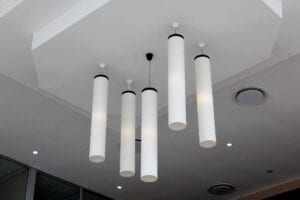
Suspended Lighting or Pendant lighting is ideal for higher ceilings or for hanging over islands or dining areas.
Ensure pendant lights are no lower than 75cm (30 inches) from a benchtop or table. They can block your view or be an obstruction.
When choosing pendant lights, consider the size of your space.
For smaller rooms, opt for smaller, lighter pendant lights.
Larger spaces can handle more significant and dramatic lighting fixtures.
If extra light is needed, you can add other light sources.
It Is OK To Choose Bulbs With A Lower Lumen Output
When it is for general lighting, the room lighting does not need to be as bright and focused as Task or Accent lighting.
Yourelectricianwill be able to help you calculate what lumen output you will need to light up a room.
A single light fitting maybe be sufficient with the correct lightbulb.
You can add extra light fittings or even go for recessed downlights for a more even spread of ambient lighting.
If you are considering recessed lighting, you should aim for approximately one fixture per 4 square feet of ceiling.
Task Lighting Adds Extra Light When Needed
Think about when you are doing an activity that requires extra light.
It can be reading in bed, food prep in the kitchen, craft activities or doing your makeup in the bathroom.
Task lighting is to help you do a task.
This type of lighting is localized and can come from various sources, such as spotlights, recessed lights or desk lamps and table lamps.
Consider These Tips For Task Lighting:
Brightness is crucial, but it shouldn’t illuminate the entire room.
Look for adjustability. Opt for fixtures and lamps that can be dimmed (or install a dimmer switch), as well as positionable fixtures such as movable arms that can be moved as needed.
Consider The Colour Of The Light.
Warmer bulbs are ideal for reading, especially at night. In comparison, cooler bulbs around your bathroom mirror will give you realistic daylight, so your makeup looks great in natural light.
Placement matters. Desk lamps and table lamps should be adjustable and pointed downward, so the light is focused on the task at hand and not in your eyes. They should also be placed on the side of your workstation to avoid glare and limit shadows.
Accent Lighting Or Feature Lighting
Where to use accent lighting
To draw attention to artwork or plants
To highlight architectural elements
As decorative lighting
Accent lighting, also known as directional lighting, aims to create a focal point.
Typically it is used to draw attention to a specific feature, such as a piece of art or a plant, or highlight architectural elements such as wall textures decorative coving.
Adequate accent lighting draws the eye to the desired feature without drawing attention to the type of lighting.
This is often accomplished with spotlights, wall sconces or recessed lighting.
To effectively attract attention, accent lighting should direct at least three times as much light to the focal point as to the rest of the room.
When it comes to accent lighting, it’s okay to focus on form rather than function.
Don’t forget about natural light.
Perhaps your room is brightly lit by natural light during the day, so you underestimate the amount of ambient light you need at night.
You can use dimmers to add more flexibility to your room’s lighting.
The Kitchen Lighting
The kitchen is the central hub of most homes and families.
We do more than just cook and eat in our kitchens, which means this space needs different lighting types.
A common mistake when planning kitchen lighting is is using a single light or a lighting track. It results in uneven light distribution, with glare and shadows on the countertop.
Flexible lighting is needed with the right placement of lights to help use the space functionality day and night.
Task and accent lighting help supplement natural light during the day and add general lighting in the evening hours.
The kitchen light is often left on longer than any other lights in the home. Upgrade your lights to energy-efficient bulbs like CFLs or LEDs. They emit less heat, which is perfect for under-cabinet and other Task lighting.
Task lighting provides focused illumination for a work area.
In the kitchen, this can include the following areas:
- Countertops
- Islands
- Sinks
- Stovetops
- Inside cabinets and drawers
- Under-cabinet lighting
Under-Cabinet Lighting
Is an effective way of creating task lighting and puts light where it’s needed most, without the risk of shadows.
Many surfaces, including granite and marble, are reflective.
Look for under-cabinet lighting that provides a diffused light source to avoid glare, such as LED strips positioned toward the wall.
Suspended Lighting
Pendant lights can be both decorative and functional in a kitchen.
They provide ambient light is distributed in all directions, and when properly positioned, these fixtures can also serve as stylish task lighting over spaces like your kitchen island or sink.
Recessed Lighting
Is excellent for low ceiling heights. If you choose recessed lighting, make sure the lights are close enough to the cabinets to provide a useful layer of light overhead where you will be working. If they are set back from the cabinets, there will be shadows on the benchtops.
Position the lights about 60cms from the walls so that the light beam’s centre hits the countertop’s edge.
Accent lighting
Accent lighting in your kitchen shows features such as artwork on the wall or a feature on a benchtop like a plant or a fruit bowl
There are several ways to add accent lighting to your kitchen:
LED light strips under a cupboard or even baseboard lighting
If you have high ceilings, pendant lights, or wall sconces above the sink, can provide both accent and task lighting.
The Living Room
The living room is where family members spend time.
It’s also usually one of the first rooms you enter. It needs to be well lit while keeping both function and form in mind.
The room lighting needs to support the activities you do (or want to do) while using the space.
If there is a TV in your living room, avoid placing ceiling lights directly above or in front of the TV,
Use accent lighting that you can dim or easily turn off.
The lights can be distracting by creating glare and making it difficult to see during dark scenes.
Ambient Light Ideas:
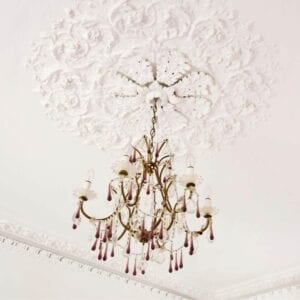
Use a large central ceiling light such as a stylish chandelier or pendant, If you use multiple light sources, make sure to distribute them evenly to avoid bright areas and harsh shadows.
Opaque lampshades and frosted glass diffusers can also help balance the lighting.
For entertaining, the proper ambient lighting is essential. Use warm-toned, dimmable bulbs to create an inviting environment that makes your guests feel comfortable and encourages conversation.
Task Lighting
Task lighting creates focused, bright light that allows you to easily see what you’re looking at while providing eye relief.
For avid readers or crafters, the right light allows you to focus on your activity and avoid eye strain.
Lamps that are adjustable for brightness and position are the most useful sources of task lighting.
Lamps with dimming options or 3-level dimming options are perfect.
Place task lights at desks, tables used for work or hobbies, and next to your favourite reading chair.
Accent Lighting
Accent lighting helps create more visual interest and highlight important aspects of your living room.
Highlight artwork, architectural details like textures or decorative mouldings.
Cabinets And Shelves:
Lighting open shelves or cabinets is a great way to feature the items you want to display, such as china, glassware or other decorative pieces.
Use fairy lights or LED strips in display cases and on bookshelves to subtly highlight a collection of items, or hang fairy lights around houseplants to create soft pockets of light and an enchanting atmosphere.
To help you plan the lighting of your home, speak to aqualified Brisbane electrician who is a lighting consultant and passionate about lighting design


